
Understanding UV-C Continuous Air Purification
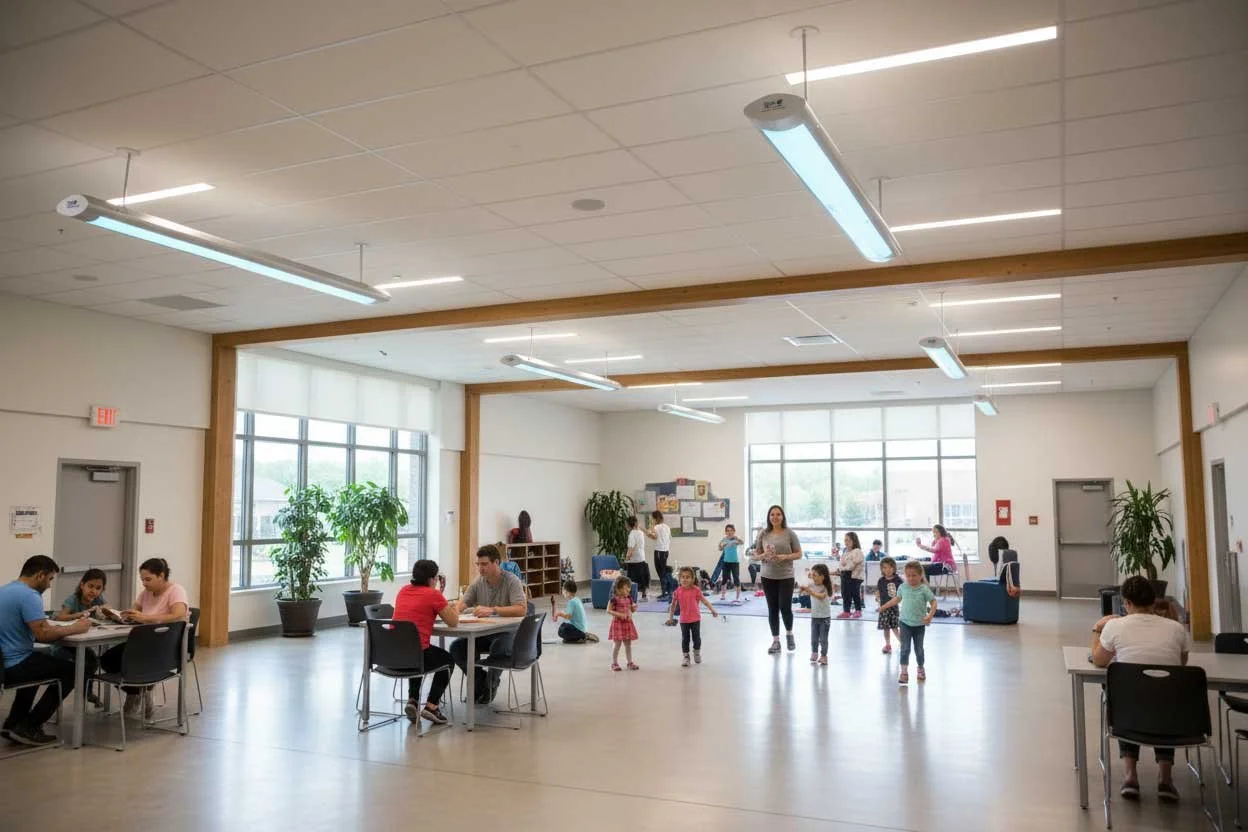
UV-C continuous air purification offers 24/7 support for cleaner indoor air in classrooms, clinics, offices, and shared environments. These systems treat air in real time, lower airborne load, and reinforce indoor stability without disrupting daily routines.
This article explains the science, performance factors, and practical applications of continuous UV-C systems for modern facilities.
Key Takeaways
Here is a brief overview of the following page:
Definition of UV-C Continuous Air Purification: UV-C continuous air purification uses steady exposure cycles to treat circulating air and support cleaner conditions in schools, offices, and care facilities.
Why Air Movement Matters: Air shifts throughout the day as people move, doors open, and rooms warm up. These changes make real-time support more effective than scheduled treatment.
How Continuous Systems Improve Indoor Quality: Repeated exposure in the UV field helps reduce airborne load and keeps HVAC components cleaner. This supports cleaner air, fewer odors, and steadier indoor comfort.
Performance Factors That Influence Results: Airflow patterns, placement, lamp output, and seasonal changes all shape the performance of 24/7 UV-C systems in real environments.
Safety and Communication for Occupants: Equipment-based UV-C stays contained inside the system, while upper room units operate within controlled zones. Clear communication helps families and staff feel confident.
How Safe Air UV Supports Facilities: Safe Air UV offers assessments, tailored plans, professional installation, and a trial period that shows how the system performs in daily use.
Contact the Safe Air UV team to explore continuous support for your facility.
UV C Continuous Air Purification for Safer Indoor Spaces
Lena arrived at the community arts center before sunrise. The front doors clicked open, and a soft echo carried through the empty hallway. The rooms were clean. The supplies were arranged with care. The air still felt heavy in a way she had grown used to over the years.
She paused for a moment as the building settled around her. She wanted to believe the rooms stayed clean after everyone left, yet she knew the air shifted through every space, even when the lights were off. This was the part no one talked about. The center looked perfect each morning. The air told a different story.
The need for UV-C continuous air purification is clearer in moments like this. The indoor environment is always in motion. Small shifts in temperature and routine send air through doorways and hallways in ways that are invisible but constant.
You can clean a room. You can prepare it for the next group. The air still moves in its own rhythm every minute of the day. Families and staff expect the air to support them with the same consistency that they expect from the rest of the building.
That expectation grows stronger each year as people become more aware of how indoor conditions shape their comfort and their trust.
Why Continuous Air Purification Matters Now
Indoor activity continues to rise in ways that building teams can see and in ways they cannot. Movement creates circulation. Shifts in temperature and routine change how air travels through each room. These patterns influence comfort and overall cleanliness.
Many facilities now look for solutions that remain active in the background instead of systems that wait for a fixed schedule.
The Hidden Rhythm of Indoor Air Movement
Air travels with a steady and complex pattern. It rises as rooms warm up. It settles when doors close. It follows people through hallways and moves through small gaps in walls and ceilings. These motions do not pause during the day.
A review of classroom ventilation in schools and universities showed that air change rates varied during normal use as doors opened, windows moved, and occupancy shifted. The study highlighted how real rooms experience changing airflow and not a single fixed rate.
Static purification struggles with this kind of variation because it treats the air at set intervals and then rests.
A recent paper in Science of the Total Environment reported that indoor air quality improved when filtration and UV-C worked together over a twenty-five-day period, but also showed how conditions changed between on and off days as air continued to move.
The study measured a 55% reduction in total suspended particulate matter and about a 47% reduction in viable airborne bacteria on days when the system operated compared to days when it did not.
These findings support what many facility teams notice in practice. The air keeps moving even after a cleaning round finishes. That motion brings in fresh material that static approaches do not always catch.
Rising Expectations for Indoor Spaces
People expect healthier indoor air, and they expect it to stay consistent throughout the day. Families want rooms that feel clean from the moment they arrive. Staff want predictable conditions during busy periods. Community members want assurance that the air supports their comfort in the same way the building supports every other routine.
Trust grows when occupants see an approach that provides real-time air purification. They respond to clear communication and steady performance.
This creates confidence because the building is doing something that matches real indoor behavior rather than a schedule that does not reflect actual airflow.
What Makes UV-C Continuous Air Purification Different
Continuous UV C support creates an environment that stays aligned with the natural movement of the air. This section explains how the continuous cycle works and how it provides value during real building use.
Constant Treatment Instead of Scheduled Cleaning
Traditional cleaning routines prepare a space for the next group of people. These routines are effective for surfaces, but the air continues to shift from moment to moment. Real-time air purification responds to those movements and supports cleaner air without waiting for gaps between activities.
How Continuous UV C Supports HVAC Stability
Continuous UV-C keeps the interior of the HVAC system cleaner. It discourages the formation of biofilm on coils. It keeps the airstream more stable as it passes over those surfaces.
This creates more predictable airflow through each season and supports long-term reliability for the equipment.
Why 24/7 UV C Systems Are Valuable in High-Use Buildings
High-use buildings operate with constant movement. Schools reset every hour. Care facilities welcome steady foot traffic. Multi-shift workplaces remain active throughout the day and night.
24/7 UV C systems support these environments by treating the airstream in a consistent way that aligns with real occupancy patterns.
The Science Behind Continuous UV C Systems
The core strength of continuous UV-C lies in repetition. Each cycle adds to the previous one. The system does not aim for a single overwhelming exposure. It aims for many meaningful exposures that happen naturally as air moves.
How Air Moves Through the UV Field
As air passes through a UV-C field, it receives a measured dose of germicidal energy. When that same volume of air returns through the HVAC system or through a recirculating device, it receives another dose. Over time, these repeated contacts disrupt microbial structure and reduce viability.
A paper on HVAC UV-C systems described how coil and airstream irradiation can reduce microbial load on surfaces and in the air, and how repeated passes through the irradiation zone further lower concentrations.
These findings align with broader reviews that examine UV-C in HVAC systems and show that the technology works best when integrated as a continuous process rather than a periodic event.
Continuous Support Compared to Single Pass Exposure
Single-pass exposure treats the air once and then stops. Continuous support treats the air each time it circulates. Continuous air disinfection aligns with the way air behaves in rooms that remain occupied for many hours each day.
Single-pass exposure treats the air during one moment. Continuous operation treats the air each time it moves through the system.
This difference becomes important because air does not stay still. Continuous air disinfection strengthens results through repetition. Each lower dose pass adds to the next one and produces meaningful improvement through ongoing cycles.
Layers That Strengthen Continuous Air Disinfection
Continuous support works best when the system does not operate alone. Air moves through filters, vents, and circulation patterns that influence how well each layer performs. A balanced plan creates stronger protection because every part contributes to the overall cycle.
Integration With Filtration and Ventilation
Filtration reduces the particulate load that collects during normal activity. This clears the pathway for UV C and helps maintain the integrity of the air that continues to circulate. UV C protects microbial quality inside those same cycles and creates consistency during busy periods.
Ventilation then stabilizes oxygen levels and carbon dioxide levels as people come and go. These three layers work together to strengthen continuous air disinfection in a predictable way.
Continuous Air Disinfection in Occupied Spaces
Upper room systems support cleaner air during active hours. They treat the air that rises into the upper part of the room and return a refreshed volume as circulation continues. Portable EDU units provide added support during peak occupancy.
These units help bring cleaner air into rooms that require flexibility, and they respond to increases in activity. They are used when needed and do not remain active at all times.
24/7 UV C Systems Inside Equipment
Systems that sit inside the HVAC equipment run quietly as they treat the airstream. In duct and in AHU installations, protect coils and interior surfaces. They also support the air that moves across those components.
This pattern helps maintain long-term reliability because the internal surfaces stay cleaner as the system runs. This is why 24/7 UV-C systems remain an important part of a complete plan.
How Continuous UV-C Helps Different Environments
Every building has a rhythm that guides how the air behaves. These rhythms influence the way real-time air purification supports comfort during the day.
Schools and Educational Buildings
Classrooms change every forty-five to sixty minutes, and each group brings a new mix of activity. Afternoon rooms often feel heavier as energy levels shift and circulation patterns slow. Continuous support gives parents and educators confidence because the air receives steady treatment across every period.
Assisted Living and Healthcare Adjacent Spaces
Older adults respond strongly to shifts in indoor quality. They benefit from stable environments because their comfort depends on consistent airflow and humidity levels. Continuous UV C supports these spaces by helping the air stay more balanced during visiting hours, meal periods, and care routines.
Offices, Municipal Buildings, and Community Centers
These spaces often hold people for long stretches of time. Air begins to feel stale when circulation slows, and people remain seated. Continuous support encourages clearer thinking and better comfort. It also helps reduce odor accumulation that appears during long dwell periods.
Performance Factors That Determine Real World Results
Continuous systems succeed through consistency. Their performance improves when the supporting conditions remain stable.
UV Output Stability Across the Year
UV C lamps follow predictable aging patterns. Their output changes as they reach the end of their operating life.
Annual scheduling protects performance because the system receives fresh lamps before the output drops below the intended level. This keeps the dose closer to its design target through each season.
Airflow Patterns and Repetition Cycles
Airflow determines how often a volume of air returns through the UV field. Systems that maintain steady airflow create more consistent results. The cycle becomes stronger when the air returns at a pace that allows meaningful exposure.
The balance between speed and exposure helps the system support the space through constant movement.
System Placement for 24/7 Effectiveness
Placement shapes the path air follows before it reaches the UV field. Shadow zones limit exposure. Clean geometry inside the equipment allows the UV field to reach the areas that need contact. Good placement supports continuous air disinfection without disruption.
Safety Considerations for 24/7 UV-C Systems
Continuous systems must protect the people inside the building. They do this through clear containment and defined operating zones.
Containment Inside HVAC Equipment
Systems inside the HVAC equipment remain sealed within the airstream and coil section. The light stays in the equipment. It never enters occupied rooms. This design protects the occupants while still treating the air through every cycle.
Safety for Upper Room and EDU Units
Upper room systems operate within a controlled zone above head level. EDU units treat the air inside their internal chamber. These systems maintain safe boundaries so they can support the room during active hours.
Building Communication and Transparency
Clear messaging helps staff members feel at ease with the technology. Families and residents appreciate simple explanations of how the system works. This communication builds trust because people understand what supports their comfort.
Implementation Pathway for Continuous UV-C in Your Facility
A clear pathway guides the process from assessment to long-term performance.
Step One: Indoor Air Review
The team reviews baseline carbon dioxide levels and particulate patterns. They also study circulation throughout the day. This helps them understand how the building behaves.
Step Two: System Design and Placement
The plan reflects the movement of the air. The team selects equipment that suits the building and creates a placement map that supports the intended cycles.
Step Three: Installation and Commissioning
The system is installed in duct systems, upper room spaces, or EDU formats. Commissioning confirms that the airflow and exposure match the design.
Step Four: Monitoring, Support, and Annual Renewal
Continuous operation benefits from structured follow-up. Annual renewal protects UV-C output. Ongoing support keeps the system aligned with actual building use.
Experience UV-C Support in Your Facility With Complete Confidence
Safe Air UV recognises that thoughtful leaders want clear information before they introduce new systems into their buildings. The trial process reflects this level of care. It begins with a full assessment carried out by trained air quality professionals.
They review your current indoor conditions, map circulation patterns, and identify the areas where continuous support would provide the greatest improvement.
The team then prepares a tailored proposal that matches the way your facility operates each day. Once the plan is approved, Safe Air UV installs the selected UUV-C systems for a thirty-day evaluation period at no initial cost.
These systems operate in the same way that permanent installations operate. This allows you to see how the technology performs during real activity rather than in a controlled demonstration.
The trial includes a clear measurement of indoor air quality before and after installation. Baseline readings capture your current conditions. Follow-up readings track how the air behaves with continuous support in place.
You receive a simple report that highlights the improvements documented during the trial. This gives you a calm and objective view of what continuous UV-C can provide in your environment.
If you would like to explore this option, the Safe Air UV team will guide you through each step and provide the information you need to make a confident decision for your building.
FAQs About Cleaner Indoor Air With UV-C
Below are simple explanations that address practical questions many schools, offices, and care settings ask when exploring continuous UV-C protection.
What is the difference between UV-C continuous air purification and traditional air cleaning devices in commercial buildings?
UV C continuous air purification works all day as the air moves, while traditional devices treat the air at fixed moments. Continuous support creates steadier conditions in busy rooms and helps maintain cleaner air during real activity.
Are UV-CC continuous air purification systems compatible with older HVAC units in schools and offices?
Most older systems can support UV-C continuous air purification once airflow paths are reviewed. A simple assessment helps confirm placement so the system works with existing equipment and provides steady support during daily operation.
What maintenance schedule is recommended for UV-C lamps in continuous operation environments?
Lamps in continuous air disinfection systems are usually checked once a year. This protects output and keeps the system performing as designed. A scheduled review gives the building consistent support through each season.
Can UV-C continuous air purification help reduce odors caused by high occupancy or poor ventilation?
Yes. Continuous air disinfection supports cleaner coils and steadier circulation, which can reduce odor buildup during long occupancy periods. The space often feels fresher because the air moves through a cleaner interior path.
How do facilities verify the performance of a UV-C continuous air purification system after installation?
Teams confirm performance through baseline readings and follow-up measurements that track airflow and particulate levels. This simple process shows how real-time air purification improves indoor quality during actual use.
Does continuous UV-C air purification lower energy consumption by improving coil cleanliness?
Cleaner coils allow air to move with less resistance. Continuous air disinfection supports this by limiting biofilm. Many facilities notice steadier airflow, which can ease strain on the HVAC system and support energy stability over time.