
UV-C Air Purification for Modern Facilities
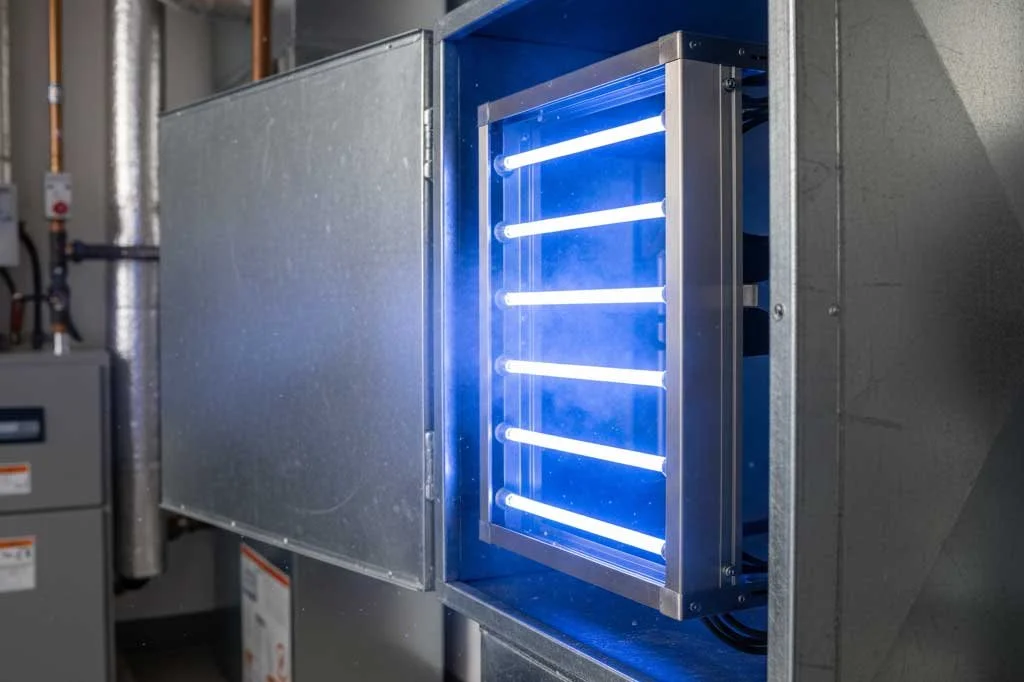
UV-C air purification helps schools, offices, clinics, and community buildings keep indoor air cleaner throughout the entire day. These systems lower airborne load, support HVAC stability, and offer steady protection in high traffic spaces.
UV-C air purification also fits easily into existing building strategies, since it works with ventilation and filtration to create a more predictable indoor environment.
This page explains how the technology works, why it matters in modern facilities, and how Safe Air UV guides every step from assessment to maintenance.
Key Takeaways
Here is a brief overview of the page.
Definition of UV-C air purification: UV C air purification uses targeted ultraviolet light to inactivate airborne microorganisms and works alongside ventilation and filtration to support cleaner indoor environments.
Main challenges addressed: The article focuses on illness-driven absenteeism, high-density occupancy, and the limits of surface cleaning and filtration alone in schools, offices, clinics, and community buildings.
How UV-C systems work and where they fit: UV C systems inactivate pathogens at the DNA or RNA level, operate inside HVAC equipment or upper room fixtures, and form one layer in a multi-layer air quality strategy.
Safety, standards, and performance factors: The page explains shielding, housings, and interlocks, references industry guidance, and highlights key design factors such as dose, exposure time, airflow, placement, and maintenance cycles.
Safe Air UV support: UV-C can improve coil cleanliness, reduce emergency service, and support occupant confidence, while Safe Air UV provides assessment-driven design, commissioning, monitoring, and a risk-free trial offer.
Contact Safe Air UV today to schedule a facility assessment or explore a trial installation.
Why Indoor Air Problems Often Go Unnoticed Until They Spread
Robert walked through the school hallway, watching students return from winter break. Something felt different this year. Last semester, absences had spiked. Classroom disruptions from illness had become routine. Teachers looked exhausted. Parents were worried about air quality challenges that traditional cleaning could not resolve.
When the school nurse approached with another stack of absence reports, he knew something had to change. UV-C air purification emerged as a promising solution that went beyond surface cleaning. The invisible threats circulating through the air were more complex than anyone had imagined.
What if there were a scientific solution that could protect students and staff without disrupting daily operations? A technology that went beyond surface cleaning to address air quality at its most fundamental level?
This breakthrough approach of UV-C air purification would transform how we think about indoor air safety in critical environments like schools, healthcare facilities, and community spaces.
What Is UV-C Air Purification?
Many people hear about UV-C air purification for the first time during a building upgrade or an indoor air quality review. The concept can feel technical at first glance, yet the science behind it is clear and easy to understand once the fundamentals come into focus.
Understanding the UV Spectrum
Sunlight reaches the Earth with several forms of ultraviolet light. These forms include UV A, UV B, and UV C. UV A and UV B reach the ground and influence daily life in familiar ways. UV C is different.
The ozone layer absorbs it, so it does not reach the surface level naturally. This distinction is important because UV C carries an energy level that interacts directly with microorganisms. That interaction disrupts their ability to function and reproduce.
Research shows that UV-C exposure in indoor air can substantially mitigate airborne viral transmission: one hamster-model study found that treatment of air with UV-C prevented transmission of COVID‑19 (SARS-CoV-2) in a controlled setting.
Another study found that combining filtration and UV-C resulted in a 55% reduction in total suspended particulate matter (and also airborne bacteria) over 25 days of monitoring.
This is the primary reason that UV-C has become a trusted tool for germicidal applications in built environments. It delivers a very specific biological effect without chemical additives or ongoing residue inside a room.
How UV-C Neutralises Airborne Pathogens
Microorganisms rely on intact DNA or RNA structures to replicate and spread. When air passes through a controlled field of UV-C light inside a system, the light interacts with these genetic structures. The interaction breaks the bonds that allow normal replication.
The organism remains present in the airstream, yet it loses its ability to reproduce. This is known as inactivation. It is different from filtration. Filters remove particles from circulation. UV C focuses on the biological integrity of the organism rather than physical removal.
Many modern systems combine both approaches. Filtration reduces particle loads. UV-C handles the microscopic organisms that escape the filter surface.
The result is a more comprehensive approach to indoor air protection and a foundation for UV-C continuous air purification in both residential and commercial spaces.
Where UV-C Air Purification Fits in Building Strategies
Indoor air quality relies on several layers that work together. Ventilation introduces fresh outdoor air. Filtration removes particulate matter. HVAC design manages temperature and humidity.
UV air purification adds a steady layer of protection that operates inside the air itself. It supports other measures by addressing microorganisms that circulate through shared spaces.
This layered approach gives building managers and facility teams a practical tool that continues to operate even when rooms are occupied. It also reduces the burden on staff because it supports cleanliness without extra routines or constant oversight.
UV-C Air Purification vs Traditional Approaches
Many facility managers compare purification options as part of long-term planning. The indoor environment changes throughout the day, so it is important to understand how each method performs under real conditions.
The goal is never to replace filtration or ventilation. The goal is to determine the most effective combination for stable and reliable indoor air performance. These next sections offer a clear comparison.
UV-C vs Filtration Alone
Filtration provides an essential first step. It captures particulate matter and larger biological loads. It performs this task well, yet it cannot address the microscopic organisms that move through the filter surface and remain active.
UV-C air purification technology approaches this challenge from a different angle. It focuses on inactivation inside the airstream. When both methods operate together, the system becomes more resilient.
Filtration reduces the volume of material. UV C limits the ability of remaining organisms to replicate. This combination gives buildings a more consistent level of protection across varied conditions and airflow patterns.
UV-C vs Ionisation, Ozone, and Chemical-Based Systems
Some technologies introduce reactive particles or chemical agents into the air. These systems often involve by-products that require careful review. Ionisation systems produce charged particles. Ozone systems introduce an oxidising gas that must remain within strict limits.
Chemical-based approaches may leave residual compounds on surfaces. UV C offers a different pathway. It treats the air inside a controlled chamber or a defined zone without introducing new material into the occupied space.
This controlled approach aligns with established indoor air quality guidance and offers a simpler safety profile for schools, clinics, offices, and community settings.
When UV-C Air Purification Makes the Most Impact
Certain environments benefit from UV-C air purification more than others. High-density buildings experience constant air movement, which increases the circulation of microorganisms.
Spaces with long dwell times, such as classrooms and meeting rooms, hold the same air for extended periods. Facilities with sensitive populations also seek higher stability in their air quality profiles.
UV-C supports these needs by offering a consistent and predictable layer of protection that operates within existing HVAC cycles.
Types of UV-C Air Purification Systems
Buildings vary in size, design, air volume, and occupancy patterns. Each space needs a system that fits its layout and its operational demands. The following system types cover most modern use cases and help facility managers understand the range of solutions available.
In-Duct and In-AHU UV-C Systems
Many buildings begin with in-duct or in-air handling unit systems. These installations place UV-C lamps inside the HVAC equipment. The light treats the moving air and also targets coil surfaces. This reduces biofilm growth, improves coil performance, and stabilises energy use.
Clean coils maintain better airflow and keep the system operating within its intended design profile. These systems remain out of sight and require minimal staff involvement after installation.
Upper Room UVGI Systems for Occupied Spaces
Upper room systems provide protection inside the occupied space itself. They directly controlled UV-C fields toward the upper area of a room. Air moves through this zone by natural convection and routine HVAC circulation.
This gives classrooms, dining halls, and worship spaces a form of real-time treatment that supports stable indoor air quality throughout the day. People remain safe at the normal room level while the system continuously neutralises microorganisms above.
Portable and Local UV-C Units
Some rooms only need temporary or local solutions. Conference rooms, consultation rooms, and mobile clinics often fall into this category. Portable UV-C units provide UV air purification without permanent installation.
They work well for buildings with fluctuating occupancy or short-term needs. They also help facilities test and refine their long-term indoor air strategies before committing to larger system upgrades.
Safety and Standards for UV-C Air Purification
A strong indoor air strategy must place safety at the center of every design choice. Facility leaders want clear evidence that UV-C air purification remains fully contained inside the system. They also want assurance that it aligns with recognised indoor air quality standards.
Once these foundations are understood, teams gain the confidence they need to bring UV-C into classrooms, clinics, offices, and shared community environments.
Keeping UV-C Where It Belongs
Modern systems use layered safeguards that protect the people inside the space. Shielding inside the device contains the light within a secure zone. Louvers guide the light in a controlled upward or inward direction so it does not reach the room at eye level. Solid housings enclose the lamps so staff members never come into contact with direct UV-C light during routine activity. Interlocks shut the lamps off the moment a technician opens an access panel. These safeguards work together to create predictable conditions during operation and during maintenance.
Buildings that use UV-C continuous air purification rely on this containment for peace of mind. It allows the system to treat the air on a continuous basis without placing a burden on staff.
It also eliminates confusion among building occupants because the system remains hidden from daily view. Clean air becomes a quiet part of the environment instead of a visible disruption.
Working Within Recognised Guidelines
ASHRAE and other industry groups offer guidance for safe placement and responsible design. These documents explain how upper room systems must be installed so that the UV-C field remains above the breathing level.
They outline how in-duct systems must be sealed within HVAC equipment. They also describe commissioning standards so that each system delivers predictable light output. These guidelines give facility managers a clear reference point during planning meetings.
They support consistent decision-making and create a shared understanding of safety among architects, engineers, and building leaders.
Communicating Safety to Staff, Parents, and Residents
Clear communication builds trust within the building community. Most people want to know two simple facts. They want to know that UV-C stays inside the equipment. They want to know that the goal of the system is to support cleaner air without adding chemical residue or new tasks for the occupants.
A brief explanation of the containment design often brings immediate reassurance. When people understand that UV C has been used for decades in hospitals and research environments, they feel more comfortable with its presence in schools, offices, and shared spaces.
This transparency creates a supportive environment around UV air purification and helps the entire building transition into the new system with confidence.
Evaluating UV-C Air Purification Technology
A wide range of products exists in the indoor air market. Some offer meaningful protection. Others rely on marketing messages with limited scientific grounding. Facility teams benefit from a structured review process that separates credible performance from broad claims.
Key Performance Factors That Actually Matter
Several variables shape the success of UV-C air purification technology. Each variable influences how well the system neutralises microorganisms in real conditions. A careful evaluation of these variables protects the long-term performance of the building.
Dose
Dose refers to the total amount of UV-C energy that reaches the moving air. Higher doses support stronger inactivation rates. A system with low output cannot provide consistent protection. Systems with well-documented dose levels give facility teams confidence in their long-term results.
Exposure Time
Organisms must remain in the light field long enough for inactivation to occur. Airflow patterns influence this contact time. Systems with thoughtful internal layout maintain a stable exposure period. This stability improves the overall performance of the system.
Airflow
Airflow is the movement of air through the treatment zone. Proper airflow prevents bypass and ensures that the entire airstream receives meaningful contact. Inconsistent airflow can create pockets of untreated air. A system with balanced airflow maintains predictable conditions.
Placement
Placement refers to the position of the lamp inside the fixture, cabinet, or HVAC system. Correct placement prevents shadows and increases the uniformity of exposure. Placement errors weaken performance. Proper placement strengthens the reliability of UV-C air purification.
Maintenance Cycles
UV-C lamps lose intensity as they age. A routine replacement schedule keeps the system performing at its intended level. Buildings that follow a consistent maintenance routine experience fewer surprises and more stable indoor conditions.
Questions to Ask Potential Vendors
A small group of questions reveals the quality of a UV-C provider.
Ask about the engineering behind the system.
Ask about independent testing and verification.
Ask for documentation that confirms dose levels and expected performance in real conditions.
Ask about monitoring options and replacement schedules.
Ask for examples of support services that extend beyond installation.
This level of inquiry ensures that you partner with a provider that supports your building throughout the life of the system.
Common Pitfalls to Avoid
A successful UV-C strategy depends on accuracy, correct placement, and alignment with recognised standards. The pitfalls below are the ones most frequently seen in the field.
Assuming any UV-C product automatically meets ASHRAE recommendations without reviewing design requirements.
Installing upper-room fixtures too low increases the chance of stray UV-C entering occupied areas.
Placing in-duct UV-C without proper sealing or without verifying airflow patterns inside the equipment.
Skipping commissioning which leads to unpredictable or inadequate light output.
Ignoring the importance of proper sensor alignment for real-time control and balanced purification.
Using outdated maintenance cycles causes lamp output to decline long before replacement.
Overlooking integration with existing building automation systems, weakening consistency and efficiency.
These pitfalls provide helpful checkpoints for facility managers, architects, and engineers as they plan a safe and effective UV-C deployment.
Cost, Savings, and Long-Term Value
Decision makers need a clear understanding of operating costs and long-term benefits. UV C systems influence energy use, HVAC stability, and occupant wellbeing. These influences create value that extends far beyond the initial installation.
Energy and Maintenance Profile of UV C Systems
UV C lamps operate at modest power levels. Their energy profile remains predictable across the entire year. Lamps follow consistent replacement cycles, which makes budgeting simple. Buildings may also experience savings in other areas.
Cleaner coils improve airflow and reduce the strain on HVAC equipment. Filters often last longer when the upstream environment remains cleaner. These improvements create a stable and predictable financial picture for facility leaders.
Operational Benefits Beyond Pathogen Control
UV C improves the internal cleanliness of HVAC equipment. Coils remain free of biofilm. Drain pans remain clear. These conditions support steady airflow and reduce fluctuations in indoor comfort.
Equipment that operates in a clean state experiences fewer emergency service calls. These benefits become more visible during high occupancy seasons or during demanding weather conditions when the HVAC system must maintain continuous performance.
Making the ROI Case to Leadership
Leaders respond well to measurable benefits. UV C supports lower absenteeism in spaces with heavy occupancy. It strengthens confidence among staff, students, patients, and visitors. It protects HVAC assets by reducing microbial growth inside the system.
These outcomes support long-term planning goals and reinforce the stability of the indoor environment. A strong ROI case shows that UV air purification creates value for both people and equipment.
How Safe Air UV Designs UV-C Air Purification Systems
Safe Air UV follows a structured design approach that aligns with the needs of each building. This approach considers air movement, occupancy patterns, space geometry, and system constraints. Here is the outline of the process from assessment to maintenance.
Assessment Driven Design
The design process begins with a full evaluation of the building. Our teams review mechanical drawings and inspect the existing HVAC equipment. They map air movement and identify zones with higher risk.
They examine room geometry and occupancy. These insights reveal the type of system that will deliver the best balance of coverage and efficiency. In duct systems suit many larger buildings.
Upper room systems suit classrooms, dining areas, and worship halls. Portable units suit rooms with rotating occupancy or specialised needs. Each choice is grounded in real conditions rather than a generic template.
Professional Installation and Commissioning
Installation teams schedule work to protect daily activities inside the building. They integrate the UV-C system into the existing HVAC system, carefully considering airflow and coil position.
They confirm containment measures and electrical connections. Commissioning verifies that each lamp performs at its intended level. This verification gives the building a strong baseline for long-term monitoring.
Ongoing Monitoring, Reporting, and Maintenance Support
After installation, Safe Air UV supports the building with routine inspections and scheduled lamp replacement. Optional monitoring tools provide real-time awareness of system status.
Reports help facility teams track performance across the year. A 30-day trial allows buildings to observe the system under real conditions before final commitment.
This level of support creates stability and clarity throughout the entire lifespan of UV-C air purification in the building.
Experience UV-C Protection Risk-Free in Your Facility
Safe Air UV understands that facility leaders need certainty before moving forward with indoor air improvements. That is why qualified buildings can access a risk-free trial designed to show measurable results under real operating conditions.
The process begins with a full review of your indoor air challenges. Our team evaluates room usage, airflow patterns, and mechanical limitations, then designs a UV-C configuration that fits the way your building operates.
Once the plan is approved, we provide the UV-C equipment with no upfront cost. Units are installed in the correct locations so your team can see how dynamic air quality solutions perform without disrupting daily schedules.
During the trial, we use professional monitoring tools to measure changes in clarity, particulate levels, and overall air stability. Baseline readings are compared with results after installation, giving you clear, objective evidence of improvement.
Schedule your facility assessment today to see whether you qualify for the 30-day risk-free trial.
FAQs About Indoor Air Protection With UV-C
Below are clear answers to common questions that help facility teams understand how UV-C air purification supports real spaces and the people who use them.
Can UV air purification help occupants who live with allergies or asthma in high-density residential buildings?
It can help because UV air purification lowers the microbial load that moves through shared hallways and ventilation paths. Residents with allergies or asthma often feel relief once shared air becomes cleaner and more stable across the building.
Does UV air purification reduce odors created inside kitchens, restrooms, or waste rooms?
It can reduce these odors by lowering microbial activity in the air. Once UV air purification treats the air inside these rooms, many facilities notice a fresher environment, especially in areas with strong scents that linger through the day.
How do seasonal humidity levels influence the performance of UV-C air purification?
Seasonal humidity can shape airflow patterns, so placement becomes important. Even with these shifts, UV-C air purification remains effective because it targets microorganisms directly, which keeps performance steady as humidity rises or falls each season.
What role does ceiling height play in the performance of UV-C continuous air purification?
Ceiling height shapes how air circulates through a room. Taller spaces often support smoother movement, so UV-C continuous air purification can treat the air more evenly and maintain cleaner conditions during long hours of activity.
Can UV air purification help facilities that struggle with poor air movement in older construction?
It can help because UV air purification treats the air that stays trapped in slow-moving zones. Older buildings often have pockets with limited circulation, and treatment in these areas improves comfort for people who spend long periods inside them.